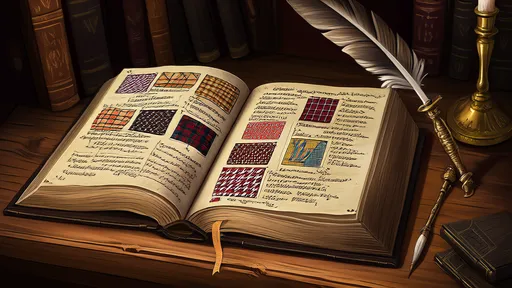
The Scottish Tartan Archives hold within their vaults a treasure trove of cultural heritage, woven into the very fabric of Scotland’s history. Among the well-known clan patterns that adorn kilts and scarves worldwide, there exists a forgotten collection—78 clan tartans that have slipped through the cracks of time. These patterns, once vibrant symbols of familial pride and regional identity, now languish in obscurity, their stories untold and their designs unseen by modern eyes.
The origins of these forgotten tartans are as varied as the clans they represent. Some were created during the 19th-century tartan revival, a period when Scottish identity was being romanticized and commodified. Others date back much further, their origins lost to the oral traditions of Highland families. What unites them is their gradual disappearance from the public consciousness, overshadowed by more commercially successful designs like the Royal Stewart or the Black Watch.
One such forgotten pattern is the MacPherson of Cluny tartan, a deep green and blue weave that once distinguished the clan’s warriors in battle. Unlike the more famous MacPherson red tartan, this variant was reserved for hunting and informal gatherings. Its muted tones were practical for blending into the Highland landscape, yet its subtle elegance made it a favorite among clan elders. Today, few weavers produce it, and even fewer Scots recognize its significance.
Another lost design is the Drummond of Perth tartan, a striking combination of crimson and gold that symbolized the clan’s ties to the Scottish monarchy. Historical records suggest it was worn during the Jacobite uprisings, but after the defeat at Culloden, its use dwindled. The British government’s suppression of Highland culture led many clans to abandon their tartans altogether, and the Drummond of Perth pattern was nearly erased from memory.
The process of rediscovering these tartans is no small feat. Many exist only as fragments in museum collections or as vague descriptions in centuries-old letters. Tartan scholars and historians have spent years piecing together clues—comparing dye samples, analyzing thread counts, and consulting with surviving clan members. In some cases, oral histories have proven invaluable, with elderly descendants recalling childhood stories of their grandparents wearing these now-rare patterns.
Modern technology has also played a role in the revival effort. Advanced textile scanning allows researchers to recreate tartans from the smallest swatches, while digital archives make these designs accessible to a global audience. Yet, even with these tools, some tartans may never be fully restored. The precise shades of natural dyes used in the 18th century, for example, are difficult to replicate with synthetic alternatives, leaving gaps in our understanding of how these patterns truly looked.
Why does this matter? To the casual observer, tartans may seem like mere fashion statements or tourist souvenirs. But to the Scottish people, they are living artifacts—a visual language that speaks to kinship, loyalty, and resilience. Each forgotten tartan represents a chapter in Scotland’s story, one that risks being lost forever if not preserved. Organizations like the Scottish Tartans Authority are working tirelessly to document and revive these patterns, but their efforts rely heavily on public interest and funding.
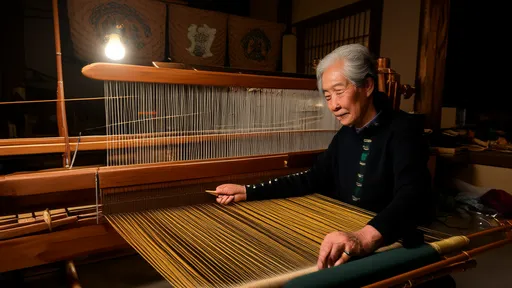
The cultural significance of these 78 forgotten tartans extends beyond Scotland’s borders. They are part of a shared human heritage, a reminder of how textiles can carry meaning across generations. In an era of mass-produced clothing, these handwoven designs stand as testaments to craftsmanship and identity. Their revival is not just about nostalgia; it’s about reconnecting with a tangible piece of history.
For those who wish to explore these lost patterns, opportunities are slowly emerging. Specialty weavers in the Scottish Highlands have begun producing limited runs of forgotten tartans, often in collaboration with historians. Museums occasionally feature exhibitions on obscure clan designs, and online databases are making it easier than ever to research one’s ancestral connections. Yet, much work remains to ensure these 78 tartans reclaim their place in Scotland’s cultural tapestry.
The story of these forgotten tartans is far from over. With each thread carefully rewoven and each pattern painstakingly reconstructed, they are being brought back to life. They serve as a poignant reminder that history is not just written in books—it’s woven into the very cloth we wear, waiting to be rediscovered by those who care to look.

By /Aug 1, 2025

By /Aug 1, 2025

By /Aug 1, 2025

By /Aug 1, 2025

By /Aug 1, 2025

By /Aug 1, 2025

By /Aug 1, 2025
By /Aug 1, 2025
By /Aug 1, 2025

By /Aug 1, 2025

By /Aug 1, 2025
By /Aug 1, 2025

By /Aug 1, 2025
By /Aug 1, 2025

By /Aug 1, 2025
By /Aug 1, 2025
By /Aug 1, 2025

By /Aug 1, 2025

By /Aug 1, 2025

By /Aug 1, 2025
