The ancient art of Bandhani tie-dye from India's western regions has long been celebrated for its intricate patterns and vibrant colors, created through an astonishing 108-step process passed down through generations. Today, contemporary artisans and designers are reimagining this heritage craft for modern markets while striving to preserve its soul.
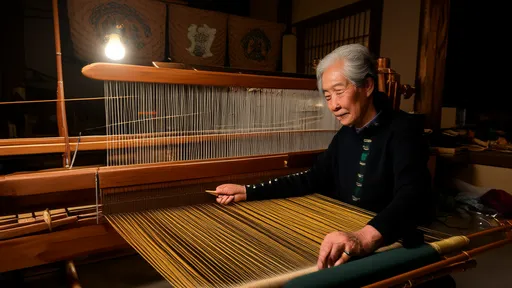
Walking through the narrow lanes of Bhuj or Jamnagar, the traditional heartlands of Bandhani, one can still find families hunched over stretched fabrics, their skilled fingers pinching and tying thousands of tiny knots that will resist dye. The process remains fundamentally manual - no machine can replicate the precise tension needed for those characteristic dotted patterns. Yet changes are coming to this centuries-old tradition.
The legendary 108 steps, a number considered sacred in Hinduism, originally encompassed everything from selecting premium mulmul cotton to preparing natural dyes from pomegranate rinds, indigo, and madder root. Each phase had its rituals - fabrics were washed in particular sequences, dried at specific times of day, and treated with secret family recipes. Master dyers could distinguish between 32 distinct tying techniques just by examining the knotted fabric.
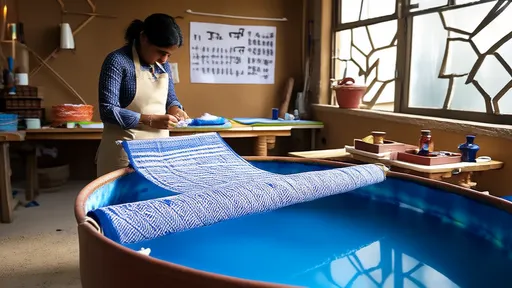
Contemporary workshops have condensed this exhaustive process without sacrificing quality. "We still maintain about 60 core steps that define authentic Bandhani," explains third-generation artisan Rajesh Khatri. "What's changed is eliminating redundant repetitions and adopting some time-saving measures." These include using pre-washed fabrics and synthetic dyes that mimic traditional colors but require fewer treatments. The most significant modernization comes in the preparatory stages - where artisans once spent days preparing materials, they can now begin tying patterns almost immediately.
Technology enters the craft in subtle but meaningful ways. LED magnifiers help artisans work longer without eye strain, while electric kettles maintain consistent dye temperatures that were previously managed through painstaking manual checks. Some larger workshops employ digital pattern projection systems that trace designs directly onto fabric, eliminating the labor-intensive marking process where masters would once blow colored powder through perforated stencils to guide their tying.
The social organization of Bandhani production has evolved too. Where entire villages once participated in different stages of the process, today's craft clusters specialize. "My family only does the tying," says Khatri. "We send out for dyeing and finishing." This division of labor allows for greater scale while maintaining craftsmanship in each specialized step. Younger artisans are also experimenting with hybrid approaches - using traditional techniques on unconventional fabrics like georgette and chiffon favored by contemporary fashion.
Market pressures drive much of this innovation. Global demand for Bandhani has surged with the popularity of boho-chic and sustainable fashion, but traditional pieces could take months to produce. "We had to find ways to make the craft commercially viable without turning to mass production," says designer Naina Patel, whose label works with artisan collectives. Her team developed a streamlined 42-step process for their bestselling scarves that retains the handmade essence while allowing reasonable production timelines.
Purists initially resisted these changes, but many now acknowledge that modernization has saved Bandhani from becoming a museum piece. "When I started thirty years ago, only older women wore these fabrics," recalls Khatri. "Now my daughters' generation loves Bandhani jeans and crop tops." The craft's survival hinges on this balance - honoring enough tradition to maintain authenticity while adapting to contemporary tastes and pace.
The dyes may be synthetic now, but the magic still happens in those millions of tiny knots. As sunlight filters through a finished Bandhani sari, creating its characteristic jewel-toned glow, what shines through is not just color but centuries of cultural resilience - a craft that has learned to breathe in a new era while keeping its ancient heartbeat.
By /Aug 1, 2025
By /Aug 1, 2025

By /Aug 1, 2025

By /Aug 1, 2025

By /Aug 1, 2025

By /Aug 1, 2025
By /Aug 1, 2025
By /Aug 1, 2025
By /Aug 1, 2025

By /Aug 1, 2025

By /Aug 1, 2025
By /Aug 1, 2025
By /Aug 1, 2025
By /Aug 1, 2025
By /Aug 1, 2025
By /Aug 1, 2025
By /Aug 1, 2025
By /Aug 1, 2025

By /Aug 1, 2025

By /Aug 1, 2025
