The retail landscape is undergoing a quiet revolution, one that blurs the lines between commerce and performance art. Immersive boutique stores, particularly those adopting theatrical concepts, are redefining what it means to shop. These spaces no longer function as mere transactional environments but as carefully curated stages where every product plays a supporting role in a larger narrative. The result is an experience that feels less like purchasing and more like participating in a meticulously designed production.
At the heart of this movement lies the idea that shopping should be an emotional journey rather than a utilitarian task. Theatrical boutiques achieve this by employing techniques borrowed from stagecraft—lighting, soundscapes, spatial sequencing, and even scent design work in harmony to create multisensory environments. Customers don’t just walk into a store; they step into a scene where the boundaries between observer and participant dissolve. This approach taps into a deeper human desire for storytelling, transforming the act of buying into something far more memorable.
One notable example is the London-based boutique "The Store X," which collaborates with playwrights and set designers to create ever-evolving retail installations. Their space might resemble a 19th-century apothecary one season and a futuristic laboratory the next, with products displayed as if they were artifacts in an unfolding drama. Sales associates double as characters who engage visitors with improvised dialogues about the "story" behind each collection. This level of immersion creates such strong emotional connections that customers often return not just to shop, but to see what happens next in the store’s narrative arc.
The psychology behind theatrical retail spaces reveals why they’re so effective. Neurological studies show that multisensory experiences create stronger memory imprints than visual stimulation alone. When a boutique combines tactile materials, ambient soundtracks tailored to different sections, and even temperature variations to match thematic zones, the brain processes the environment as an event rather than a location. This explains why visitors to these stores can recall specific products with remarkable clarity long after their visit—the memory is stored alongside the emotional resonance of the experience itself.
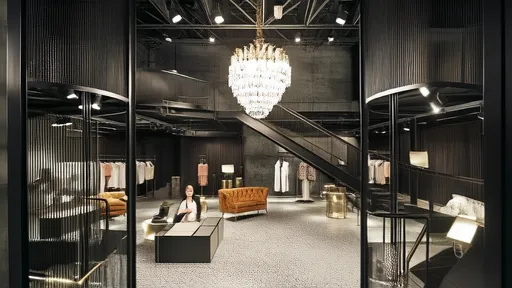
Architecturally, these spaces challenge conventional retail design principles. Instead of open floor plans that prioritize product visibility above all else, theatrical boutiques often employ deliberate visual obstructions—curtained archways, mirrored labyrinths, or elevated platforms—that pace the customer’s journey. Much like a play’s three-act structure, the space guides visitors through exposition (introduction to the brand’s ethos), rising action (exploration of featured collections), and resolution (checkout areas designed as dramatic finales). This controlled revelation of space creates anticipation and makes discovery an integral part of the experience.
Technology plays a subtle yet crucial role in enhancing these theatrical environments. Rather than overt digital displays that might break the illusion, many boutiques use concealed sensors and projection mapping to create magical moments—a dressing room mirror that subtly adjusts lighting to match the period of the garment being tried on, or fitting rooms that play era-appropriate background music when certain items are brought inside. These technological touches remain invisible until triggered, preserving the handmade quality of the theatrical illusion while adding layers of surprise.
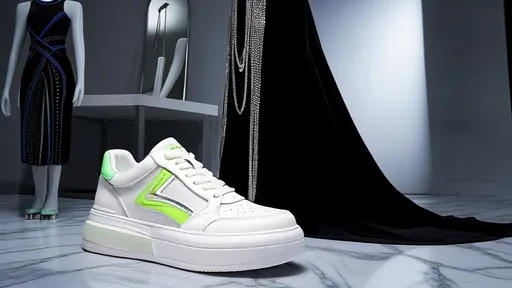
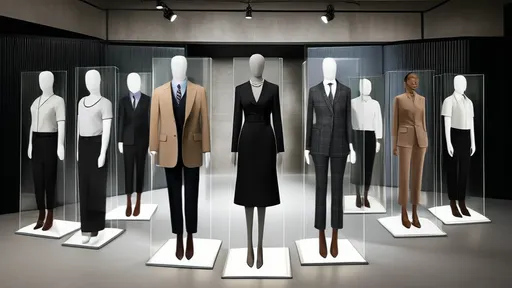
The merchandise selection in these boutiques follows different rules than traditional retail. Instead of organizing by category or price point, products are arranged according to their role in the store’s narrative. A single display might combine clothing, home goods, and rare books if they all contribute to telling a particular story. This approach encourages cross-category shopping in ways that feel organic rather than promotional. Customers frequently report purchasing unexpected items simply because they "belonged" to the story they found themselves participating in during their visit.
Critics initially dismissed theatrical retail as an extravagant niche, but its commercial success tells a different story. Boutiques employing these techniques report average visit durations 300% longer than conventional stores, with corresponding increases in conversion rates and average order values. More importantly, they achieve something rare in modern retail—customers who arrive as audiences but leave as devoted patrons, emotionally invested in the store’s continuing narrative. In an era where online shopping dominates convenience, these spaces offer something algorithms cannot replicate: the irreducible human magic of live, unscripted experience.
As the retail world continues to evolve, the theatrical boutique concept appears poised to influence far beyond luxury sectors. Pop-up versions appear at music festivals, airport terminals experiment with narrative-driven duty-free zones, and even grocery chains test produce sections staged as farmers’ markets complete with artificial dawn lighting and recorded birdsong. What began as an avant-garde retail experiment is revealing itself as perhaps the most human way to sell—not through persuasion or convenience, but through the age-old power of a good story well told.

By /Aug 1, 2025

By /Aug 1, 2025
By /Aug 1, 2025

By /Aug 1, 2025
By /Aug 1, 2025

By /Aug 1, 2025
By /Aug 1, 2025

By /Aug 1, 2025

By /Aug 1, 2025
By /Aug 1, 2025

By /Aug 1, 2025

By /Aug 1, 2025

By /Aug 1, 2025

By /Aug 1, 2025
By /Aug 1, 2025

By /Aug 1, 2025

By /Aug 1, 2025
By /Aug 1, 2025

By /Aug 1, 2025
By /Aug 1, 2025
