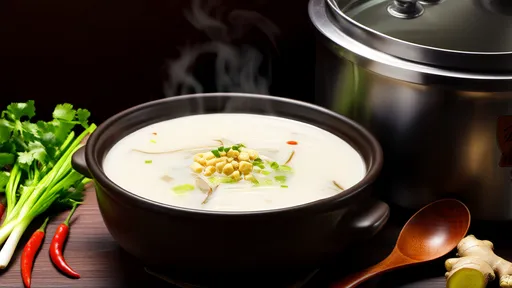
In the realm of culinary arts, few techniques yield as rich and satisfying a result as transforming humble chicken frames into a luxuriously creamy, opaque broth known as milk-white soup. This traditional method, perfected over generations, hinges on a simple yet profound process: extracting every last bit of flavor, collagen, and marrow from the bones. While simmering for hours in a stockpot is the classic approach, the modern kitchen marvel, the pressure cooker, has revolutionized this art. By applying intense pressure and heat, it achieves in a mere 30 minutes what once took half a day, producing a broth that is not only intensely flavorful but also boasts that coveted, restaurant-quality milky-white appearance.
The magic of this transformation lies in the science of emulsion. A perfectly clear broth is achieved through gentle, uninterrupted simmering that avoids agitating the fats and proteins. The milk-white broth, however, is its boisterous, emulsified cousin. The intense, rolling boil forced by the pressure cooker violently churns the water, fat, and broken-down collagen from the bones. This action shreds the fat into microscopic droplets and shears proteins, which then act as emulsifiers, suspending those tiny fat globules evenly throughout the liquid. The result is no longer a clear soup with a layer of fat on top, but a stable, homogeneous, and opaquely white liquid where the fat is permanently integrated, giving the broth its signature rich body, velvety mouthfeel, and stunning visual appeal.
The choice of ingredient is paramount, and here, the often-discarded chicken frame is the undisputed star. Comprising the carcass after the breasts, thighs, and wings have been removed, the frame is a treasure trove of flavor. It is packed with connective tissues, cartilage, and bits of meat clinging to the bones—all of which are laden with collagen. When subjected to the high heat and pressure of the cooker, this collagen hydrolyzes, melting into the water to form gelatin. This process is the absolute key to the broth's luxurious texture. It provides the body and viscosity that makes the broth coat a spoon, and it contributes significantly to the emulsification process. Using a frame from a roasted chicken adds another incredible depth of flavor, as the Maillard reaction from roasting caramelizes proteins and sugars, creating a more complex and robust base for the soup.
Preparation, though simple, requires attention to detail for the best results. Begin by thoroughly rinsing the chicken frames under cold water to remove any residual blood or bone fragments. For an added layer of flavor and to ensure a clearer final product, many chefs blanch the bones first. This involves placing the frames in a pot, covering them with cold water, bringing it to a rapid boil for just a few minutes, and then draining and rinsing them again. This step coagulates surface proteins and removes impurities that can cloud the broth. After blanching, the frames are ready for their pressure cooker journey. There's no need to break them down further; their structure is perfect for maximizing surface area for extraction while being easy to remove later.
Now, for the main event: the pressure cooking. Place the prepared chicken frames into the inner pot of your pressure cooker. Cover them with cold, fresh water, but do not fill the pot beyond its maximum capacity line, usually about two-thirds full. The general ratio is about one pound of bones to one quart of water, but this can be adjusted based on how concentrated you want the final broth to be. The beauty of this method is its simplicity—seasoning at this stage is a matter of preference. Many purists add only a knob of ginger and a couple of scallions, bruised to release their aroma, arguing that salt and other seasonings should be added later when the broth is being used in a final dish to have absolute control over the seasoning. Securely lock the lid onto the cooker.
Set the cooker to high pressure and set the timer for 30 minutes. The machine will take some time, usually 10-15 minutes, to come up to full pressure. Once it does, the 30-minute countdown begins. During this time, the internal temperature rises well above the normal boiling point of water, to about 120°C (250°F). This superheated environment aggressively attacks the bones and connective tissues, forcing them to break down and release their goodness at an exponentially faster rate than conventional boiling. The constant, violent agitation inside the sealed pot, though unseen, is tirelessly working to create that perfect emulsion. The wait is minimal compared to the traditional method, yet the results are, arguably, superior in both intensity and texture.
Once the cooking time is complete, it is crucial to let the pressure release naturally. This means simply turning off the cooker and walking away for at least 15 to 20 minutes, or until the float valve drops, indicating the pressure inside has equalized with the room. Do not use the quick-release method. A sudden release of pressure causes the liquid to erupt into a violent boil instantly, which can shatter the delicate emulsion you've worked so hard to create, causing the fat to separate from the broth and resulting in a greasy, less appealing product. The natural release allows the broth to cool gradually, protecting its integrity and ensuring it remains beautifully homogenous and creamy.
After the pressure has fully released, carefully open the lid away from your face to avoid any residual steam. You will be greeted by the incredible aroma of rich chicken and the sight of a deeply clouded, off-white broth. Using tongs, remove the large bones and any big pieces of ginger or scallion. The bones will be very soft and may even crumble. The final step is straining. Pour the broth through a fine-mesh strainer or a strainer lined with cheesecloth into a large bowl or another pot. This will catch any small bone fragments, bits of cartilage, and other impurities, leaving you with a perfectly smooth liquid. Press gently on the solids in the strainer to extract every last drop of flavorful broth, but avoid pressing too hard, which can force finer particles through and make the broth gritty.
At this point, you have a magnificent, versatile foundation for countless dishes. This milk-white broth is the soul of comfort food. It forms the base for classic chicken noodle soup, providing a body so rich it feels like a warm embrace. It is essential for authentic wonton soup and ramen, where the creamy texture clings to the noodles and fills out the flavor profile. It can be used to cook rice or grains, infusing them with a profound savory depth. Reduce it further in a pan to make a intense sauce or gravy. The applications are nearly endless, each one benefiting from the deep, comforting essence and luxurious texture that the pressure cooker method delivers so efficiently.
In conclusion, the technique of pressure cooking chicken frames for 30 minutes to produce a milk-white broth is a brilliant synthesis of traditional culinary wisdom and modern technology. It demystifies a process that once seemed daunting, making a restaurant-quality staple accessible to any home cook on a weekday schedule. It is a testament to the idea that the most flavorful things often come from the most unexpected places—the scraps and frames we might otherwise discard. This method doesn't just save time; it unlocks a world of deep, savory flavor and sublime texture, proving that with the right technique, a simple ingredient can be transformed into something truly extraordinary.
By /Aug 20, 2025
By /Aug 20, 2025
By /Aug 20, 2025
By /Aug 20, 2025
By /Aug 20, 2025
By /Aug 20, 2025
By /Aug 20, 2025
By /Aug 20, 2025
By /Aug 20, 2025

By /Aug 20, 2025
By /Aug 20, 2025
By /Aug 20, 2025

By /Aug 20, 2025
By /Aug 20, 2025
By /Aug 20, 2025
By /Aug 20, 2025
By /Aug 20, 2025
By /Aug 20, 2025
By /Aug 20, 2025
By /Aug 20, 2025
