In kitchens across Asia, a quiet revolution has been simmering for decades, one that marries ancient culinary wisdom with modern convenience. The electric rice cooker, that unassuming countertop appliance found in nearly every household, has evolved from a simple steaming vessel into a sophisticated culinary partner capable of producing restaurant-quality meals with a single press of a button. Among its many triumphs, none is more beloved or emblematic of its capabilities than the rich, aromatic, and deeply satisfying lap mei fan, or cured meat rice.
The magic of this dish, and indeed of the electric rice cooker itself, lies in its deceptive simplicity. The process appears almost too straightforward to yield such complex flavors. At its heart is a golden ratio, a piece of culinary scripture passed down through generations and now perfected for automated cooking: a precise 1:1.2 ratio of rice to water. This isn't a suggestion or a rough estimate; it is the foundational law for achieving perfectly cooked, separate grains that form the ideal canvas for the potent flavors to come.
This specific measurement is critical because it accounts for the unique cooking environment of the electric rice cooker. Unlike stovetop methods where steam can readily escape, the sealed environment of the cooker traps moisture, creating a pressurized, steamy chamber that cooks the rice evenly from all sides. Too much water, and you end up with a gluggy, porridge-like consistency, the grains bursting and losing their individuality. Too little, and the bottom layer scorches while the top remains hard and undercooked. The 1:1.2 ratio is the sweet spot, calculated to be fully absorbed by the rice just as it reaches the peak of tenderness, leaving no excess water to make it soggy and no deficit to cause burning.
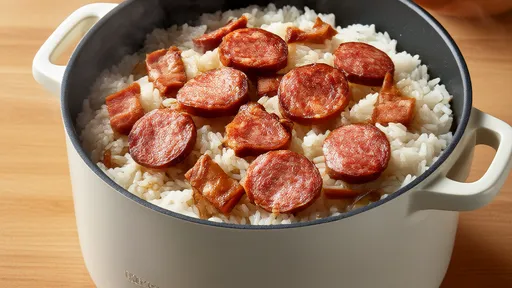
The true alchemy begins when this precise hydrology is applied to lap mei fan. The dish is a celebration of preserved meats—lap cheong (sweet Chinese sausage), lap yuk (cured pork belly), and perhaps some duck liver sausage or cured duck leg. These ingredients are treasures of flavor, concentrated and intensified through weeks of salting, air-drying, and smoking. They are not merely toppings to be added after the fact; they are integral components cooked right along with the rice.
Before the button is pressed, the raw, rinsed rice is laid in the cooker's inner pot. The cured meats, sliced into coins or chunks, are nestled directly into the raw grains. As the cooker cycles from heating to boiling to steaming and finally to warming, a magnificent exchange takes place. The heat renders the fats from the sausages and pork belly. These precious, flavorful oils don't pool away; they are drawn into the rice, coating each grain in a savory, glossy sheen. Meanwhile, the intense umami and sweetness from the meats seep out, perfuming the entire batch of rice from the inside out. The rice doesn't just cook beside the meat; it cooks in its essence.
The "one-touch" operation of the modern rice cooker is the unsung hero of this process. These devices are marvels of thermal engineering. They don't just boil water; they intelligently manage temperature. They heat aggressively to bring the water to a boil, then reduce power to maintain a gentle simmer that allows for absorption without agitation, and finally, they switch to a low keep-warm temperature that continues to steam the rice to perfection. This automated precision eliminates guesswork. There is no need to monitor a flame, listen for a change in the bubble's sound, or worry about timing. You measure, you add, you close the lid, and you press start. The machine assumes the role of a vigilant, experienced chef.
When the cheerful chime signals the end of the cycle and you lift the lid, the reward is nothing short of spectacular. A cloud of intensely savory steam billows out, carrying notes of sweet sausage, rich pork, and toasty grain. The rice is flawlessly cooked—each grain distinct yet tender, glistening with rendered fat and deeply colored by the soy sauce and meat juices. The meats themselves, now fully cooked, have become even more tender, their flavors mellowed and infused into the dish. A quick stir is all that's needed to distribute the treasures evenly throughout the pot.
The final dish is a complete, satisfying meal that belies its simple preparation. It’s a testament to how technology can honor and simplify tradition without diluting its soul. The electric rice cooker, often taken for granted, proves itself to be a powerful tool for creating deeply cultural, flavor-packed food. It demonstrates that the future of cooking isn't always about complexity or innovation for its own sake; sometimes, it's about perfecting the fundamentals, about engineering a machine that understands a 1:1.2 ratio can be the key to unlocking a world of flavor, all at the touch of a single button.
By /Aug 20, 2025
By /Aug 20, 2025
By /Aug 20, 2025
By /Aug 20, 2025
By /Aug 20, 2025
By /Aug 20, 2025
By /Aug 20, 2025
By /Aug 20, 2025

By /Aug 20, 2025

By /Aug 20, 2025
By /Aug 20, 2025
By /Aug 20, 2025

By /Aug 20, 2025
By /Aug 20, 2025
By /Aug 20, 2025
By /Aug 20, 2025
By /Aug 20, 2025
By /Aug 20, 2025
By /Aug 20, 2025
By /Aug 20, 2025
